


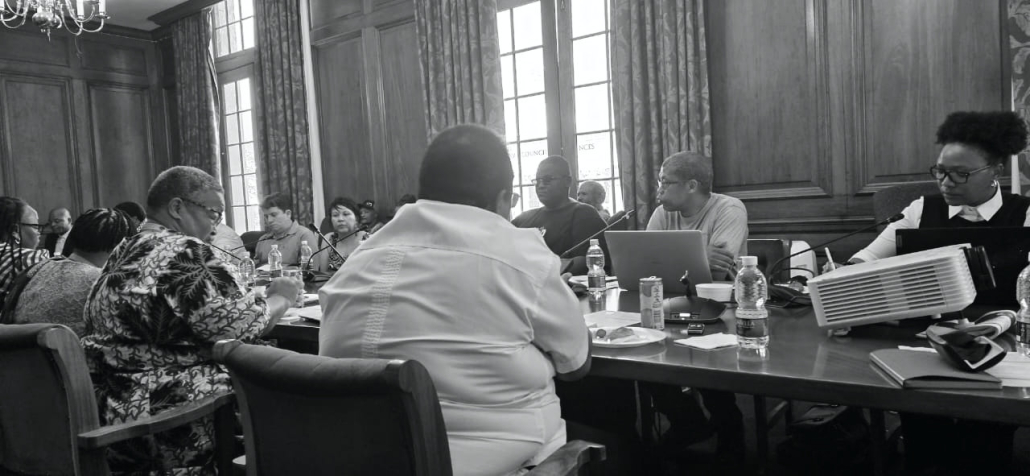
For many people, the workings of Parliament are something of a mystery, one that they may not be very interested in or may not believe has much impact on their lives. This could not be farther from the truth, as the Parliamentary Monitoring Group (PMG) explains below.
South Africa’s Constitution specifically instructs Parliament to facilitate public involvement in legislative and other processes. Section 59(1)(a) mandates the National Assembly (NA) to facilitate public involvement in its legislative and committee processes, ensuring transparency and citizen participation in law-making and governance. This principle is echoed in other sections for the National Council Of Provinces (section 72) and provincial legislatures (section 118). This means the NA must actively create ways for the public (including media, civil society, and academia) to engage with its work, holding sessions in public and taking reasonable measures to manage access to such proceedings.
It is therefore both a citizen’s right and their responsibility to engage with parliamentary committees and their programmes – it is not necessary to wait for an invitation for comment to do so. An active and proactive citizenry is one of the greatest assets of a democracy, as it supports the defence of human rights, provides expertise and experience from the ground, and – importantly – enables oversight regarding the issues that affect people in their daily lives.
Read this new blog post from PMG to understand how to go about engaging with portfolio committees.
Source: Parliamentary Monitoring Group
Parliamentary committees are where most of the real work of Parliament happens. While plenary sittings tend to attract public attention, it is in committees that legislation is scrutinised in detail, budgets are interrogated, and government departments are held to account.
Each national department is overseen by a specific parliamentary committee. This structure allows MPs to spend sustained time studying proposed laws, policy plans, and expenditure frameworks, and to track how departments and public entities actually implement what Parliament has approved.
Committees also provide something plenary sittings cannot: a formal space for members of the public, civil society organisations, and experts to engage directly with MPs and influence parliamentary work.
Committees usually meet weekly. Their work includes the following:
- overseeing departments’ strategic plans, annual performance plans, budgets, and annual reports;
- monitoring how programmes are implemented and how public funds are spent;
- processing legislation and statutory appointments;
- holding public hearings on laws and topical issues;
- conducting inquiries;
- and undertaking oversight visits and study tours.
They also engage institutions such as the Auditor-General of South Africa, the Financial and Fiscal Commission, and the Department of Planning, Monitoring and Evaluation on sector-specific challenges.
This work is grounded in the Constitution and the Rules of Parliament, which give committees wide powers to summon departments, demand information, and conduct oversight. Within that framework, each committee sets its own programme of work. In practice, most committees decide on their priorities before or at the start of a new parliamentary year.
Programmes are usually drafted by a management structure made up of the committee chairperson and committee staff. In drawing up a programme, they take into account the committee’s mandate, its legislative responsibilities, and fixed obligations such as the annual budget process. Committee members can also propose issues for inquiries or focused oversight. Once drafted, the programme must be approved by the full committee and can be adjusted as political priorities or circumstances change.
Although committees regularly invite public submissions, stakeholder groups and ordinary citizens rarely try to influence committee programmes proactively. Yet the public has the right to do so. Committees benefit from on-the-ground experience, specialist knowledge, and independent research that MPs and officials may not have. Citizens do not need to wait for a formal call for submissions to raise concerns or propose issues for scrutiny.
Before engaging, it is useful to understand the mandate of the relevant committee, the department or entities it oversees, and the work it has already done. Committee mandates, past meetings, and upcoming programmes are publicly available. This makes it easier to tailor submissions so they are relevant and actionable.
Make your voice heard
Submit your input directly to the committee here: https://www.pa.org.za/write-committees/recipients/ or e-mail committee secretaries using the contact details here.
We suggest you use the questions below as a guide when writing to a committee.
1. What issues should the relevant committee put on its agenda and list of priorities in 2026?
2. Do you have specific experience, information, and research (specifically on the performance of a relevant department and entity that the committee is overseeing) that could assist the committee, and if so, what?
3. What questions should the committee be asking as it undertakes its oversight work?
4. Do you have any advice on how the committee can improve its oversight?
5. Committees approve the budgets of departments and entities. They also recommend that National Treasury should either increase or not reduce departmental allocations. What departments and entities should receive more money, and why?
6. In line with its powers and functions, is there a specific investigation and/or inquiry that a committee should be instituting?
7. Committees consider legislation from the Executive. They also have the power to initiate legislation. What legislative gaps exist, and what legislative fixes are needed? Although ordinary citizens may not submit bills to Parliament, they may encourage MPs or committees to introduce legislation that deals with their concerns.
8. Committees also play a crucial role in overseeing the implementation of legislation. Citizens who are impacted by these laws are encouraged to engage with the relevant committees to share how the legislation is affecting them in their daily lives.