


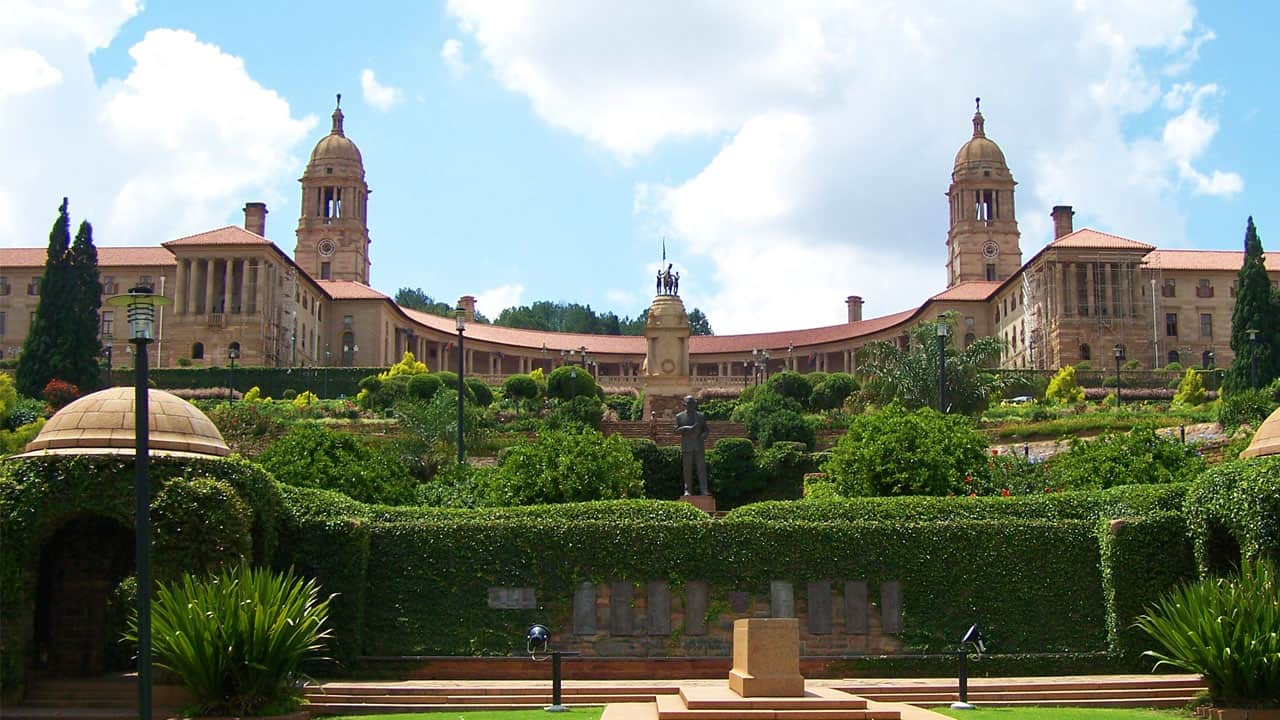
The newly green-lighted parliamentary committee on the Presidency will enable the National Assembly (NA) to scrutinise the Presidency’s operations and budget. This, says Parliament, will be the first time such scrutiny will be available through a dedicated, rule-based structure.
On 2 December, the NA adopted several amendments to its rules, including the establishment of the new committee – which was also one of the recommendations of the Zondo commission, though one the former governing ANC did not take seriously.
“The decision to establish the committee follows extensive research and several calls for such a committee, given the Presidency’s overarching role in government. The issue got traction in the Sixth Parliament, when the Parliamentary Budget Office (PBO) was tasked with conducting preliminary research on oversight mechanisms for the office of the head of state and government,” says Parliament.
The PBO confirmed that the Presidency budget vote is subject to the same oversight obligations and prescripts as any other budget vote, says the legislature, adding that its subcommittee on the review of assembly rules then drafted the technical amendments needed to give effect to this decision. “After considering the subcommittee’s report of 13 November this year, the rules committee agreed that the National Assembly should adopt these rule amendments.”
According to the meeting report, the committee will have several duties, including:
- maintaining oversight over the budget and work of the Presidency in accordance with the applicable law, the rules, and the delegation of functions in the executive;
- calling upon the member of the executive designated by the president to account for the budget and administration of the Presidency;
- calling upon the president and deputy president once per year within the annual programme of the NA to discuss policy matters of national or international importance;
- performing any other function assigned to it by legislation, other provisions of these rules, resolutions of the NA or referred by the Speaker; and
- adopting guidelines regarding the execution of its mandate including the guidelines to provide for liaisons with the president and deputy president.
The committee on the Presidency would comprise 11 members, with four members from the ANC, two from the DA, one from the MKP, one from the EFF, and three members from smaller parties.
Political parties have welcomed the move, saying it was long overdue and something that has long been called for.
Executive not above accountability
Parliament has been lax in holding the executive accountable for irregularities. As far back as 2016, in a case brought by the EFF and DA and in which Corruption Watch appeared as amicus, the Constitutional Court held that Parliament failed to demand accountability from former president Jacob Zuma for disregarding the remedial action called for by the Public Protector in the report Secure in Comfort, regarding the use of state money for upgrades to his Nkandla compound.
The remedial action was that Zuma should repay R7.8-million that was improperly used to build, among others, a visitor’s centre, amphitheatre, and the infamous ‘fire pool’ at his KwaZulu-Natal residence. None of these were related to security.
In a unanimous judgment handed down on 31 March 2016, then Chief Justice Mogoeng Mogoeng said Zuma “failed to defend, uphold and protect the Constitution of the land” in the matter and his failure to comply to the findings is inconsistent with constitutional obligations. The court further held that the Public Protector’s remedial action is binding and cannot simply be ignored. It can only be set aside by a court in a judicial review.