


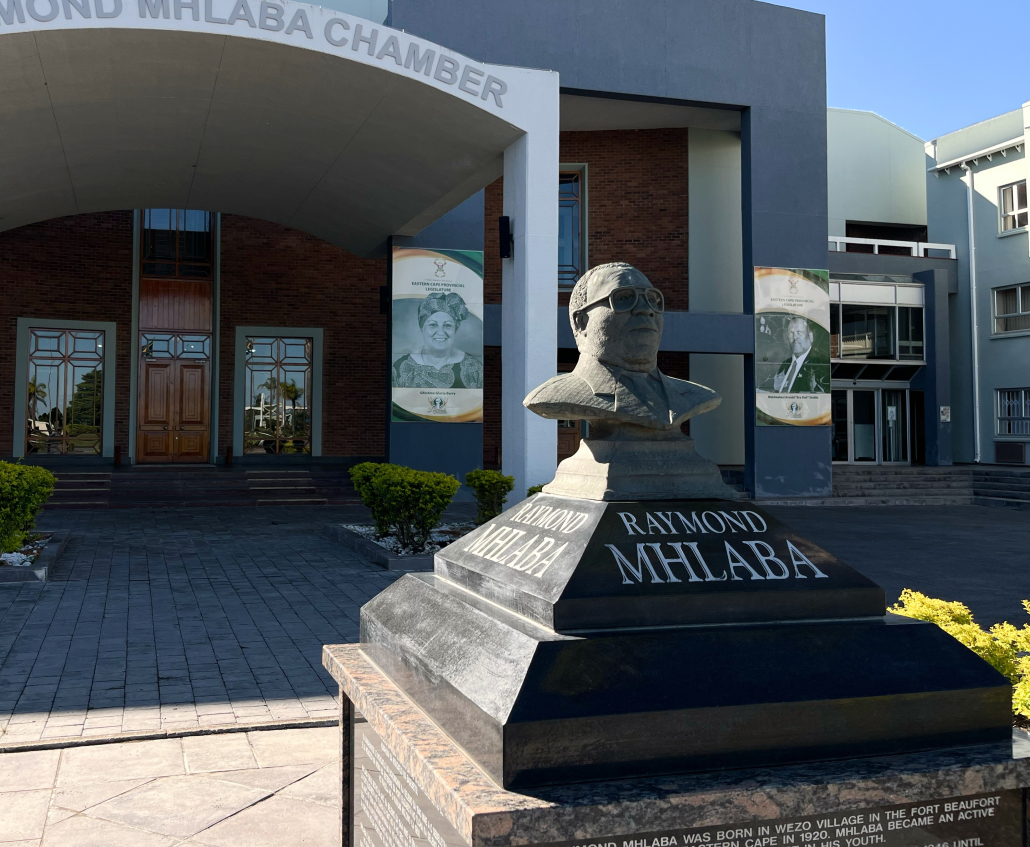
Corruption Watch (CW) today led a group from 10 community-based organisations (CBOS) supported under the Strengthening Action Against Corruption (SAAC) project in presenting the preliminary findings of a corruption risk assessment report on local government in the province.
The report highlights risks associated with poor governance and weaknesses in controls that emerged across various municipalities during the assessment, conducted in 2025. CW executive director Lebogang Ramafoko presented the key findings of the report to legislators, highlighting areas of concern contained therein. A representative of the CBOs also shared the common issues of service delivery experienced by the communities they represent.
The invitation by the legislature was in response to efforts by CW and SAAC project partners – the Social Change Assistance Trust (SCAT) and Transparency International (TI) – to advocate for improved accountability to communities by municipalities in the province. The CBOS that have been part of SAAC since its launch in 2024 have consistently recorded service delivery challenges related to the supply of water, housing and road maintenance, among others.
“These issues, on the surface, present as mere service delivery incidences affecting all of South Africa, but the focused CRA adds an analytical perspective to them. It also adds credibility to research that CW and other institutions in our space say: poor service delivery does not happen in isolation. It is often the result of weakening of governance protocols, which is in turn a breeding ground for corruption,” says Ramafoko.
What the CRA found
Through the CRA process, researchers deployed by SAAC recorded weaknesses in the governance of key functions of municipalities, including supply chain and financial management, recruitment procedures, procurement and tender management and implementation plans for municipal programmes. Despite this, a common threat of lack of accountability is also present. The primary finding of the report is that corruption in local government in the Eastern Cape is not a series of isolated lapses, but a self-reinforcing ecosystem. The core of this crisis is a “structural cycle of corruption” where administrative disorder is manufactured to facilitate the siphoning of public funds.
The municipalities that were selected for the CRA include the Nelson Mandela Bay and Buffalo City metropolitan municipalities and the Nyandeni, Emalahleni, Senqu, Makana, Kouga, Ingquza Hill, and Umzimvubu local municipalities.
Pockets of hope: the roadmap to recovery
Despite the concerning findings, the report identifies “governance outliers” that prove reform is possible. Senqu is lauded as a model for success, maintaining sustained clean audits through a rigorous “five lines of defence” assurance model. Similarly, recent improvements in Kouga and Umzimvubu demonstrate that when political will aligns with administrative discipline, the trajectory of mismanagement can be reversed.
“Municipalities across South Africa can do better, as long as they adhere to their integrated development plans and vision, and consult with the communities that have elected them. Through SAAC we aim to empower communities to demand accountability and understanding of how their municipalities work and who their leaders are. It is their right as residents to know what is prioritised in their best interest.
Recommendations and strategic actions
Addressing corruption requires moving beyond audits to targeted interventions at points of high discretion. Key strategies include:
- professionalising civil service with strict competency standards;
- implementing real-time digital transparency for procurement; and
- empowering community organisations and civil society as independent monitors.
The partnership between CW, SCAT and TI aims to build capacity, develop advocacy tools like the CRA report and foster community-led accountability. Beyond this, SAAC supports youth engagement through innovative tools like digital reporting mechanisms, to combat systemic corruption and improve service delivery.
The findings of this report seek to make the provincial government aware of the deepened challenges that communities face and that the era of hiding behind “procedural compliance” while communities go without essential services and being stripped of their dignity should come to an abrupt end.
ENDS
Please click here for link to report.
For media enquiries contact:
Oteng Makgotlwe
Cell: 076 473 8336
E-mail: Otengm@corruptionwatch.org.za
For technical enquiries contact:
Nontobeko Gcabashe, SAAC project lead
Cell: 072 032 6537
E-mail: Nontobekog@corruptionwatch.org.za


