


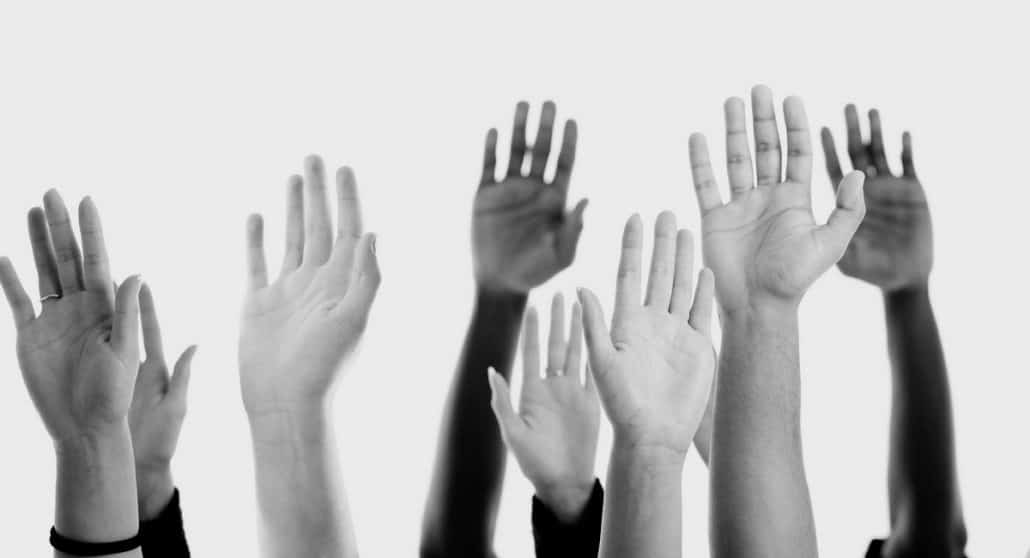
Democracy. A word we often hear spoken in various contexts and with good reason, because its presence or absence is hugely influential on transformation, independence, progress, and fairness in the world. A democratic system is one which enables public control over decision-making and -makers, in which people are entitled to have a say in decisions or policies that affect them. A democratic system, no matter how large or small, is the opposite of autocracy, monocracy, authoritarianism, or any other form of government in which power is vested in a small group, or one person.
The word ‘democracy’ comes from the Greek demokratia, a combination of demos (people) and kratos (power or rule). It means ‘rule by the people’ and is one of the crucial drivers of any free and just society – keeping this in mind, and also considering South Africa holds municipal elections later this year, it is appropriate that we start off the new year by taking a look at how democracy is faring in today’s world.
Towards the end of 2025 the International Institute for Democracy and Electoral Assistance (International IDEA), an organisation supporting democracy around the world, published the latest edition of The Global State of Democracy (GSoD). Launched in 2016, this annual publication analyses the state and quality of democracy across the globe, through evidence-based, balanced analysis and data. It draws from more than 20 reputable datasets including Freedom House’s Freedom in the World index, the World Health Organization’s Global Health Observatory, the Global Media Freedom Dataset from Jenifer Whitten-Woodring and Douglas Van Belle, and Political Risk Services’ International Country Risk Guide.
The latest report covers the period from 2019 to 2024.
“The findings of the 2025 Global State of Democracy report underscore the current global climate of radical uncertainty, exemplified by political developments in the US that are shaking long-held assumptions about democratic resilience and multilateralism,” says International IDEA.
These developments are not happening in a vacuum, continues the organisation: “Global patterns show that democracy around the world continues to weaken. In 2024, 94 countries – representing 54% of all countries assessed – suffered a decline in at least one factor of democratic performance compared with their own performance five years earlier. In contrast, only 55 countries (32%) advanced in at least one factor over that period.”
The GSoD covers four core categories of democratic performance – Representation (free and equal access to political power), Rights (individual liberties and resources), Rule of Law (predictable and equal enforcement of the law, and limitation of government power), and Participation (instruments for and realisation of political involvement).
Results are compiled from over 150 indicators within those four main categories.
Scores from all sources have been statistically adjusted to fall between 0 (lowest achievement) to 1 (highest achievement). “If a country’s score exceeds 0.7, its performance is labelled ‘high’,” says International IDEA. “Scores below 0.4 correspond to ‘low’ performance. Scores between 0.4 and 0.7 classify a country’s performance as ‘mid-range’.”
South Africa falls generally into the mid to high performance ranges – more about this later.
Assessing global democracy
Each of the four GSoD categories named above includes several sub-categories such as Local Democracy (To what extent are there freely elected, influential local governments?), Effective Parliament (To what extent does Parliament oversee the executive?), Absence of Corruption (To what extent is the exercise of public authority free from corruption?), and Access to Justice (To what extent is there equal, fair access to justice?). The sub-categories are further divided into numerous indicators such as Freedom of Expression, Prosecution of Office Abuse, Civil Society Organisation Consultation, and Social Group Equality.
Among the four main categories, states International IDEA, performance was strongest overall in Representation, with 47 countries (27%) achieving high scores in 2024 – South Africa was one of these with a score of 0.73. However, the organisation adds, “In the 2024 electoral super-cycle year, the global score for Representation fell to its lowest level since 2001, with seven times more countries declining than advancing. These declines occurred around the world in both low- and high-performing democracies.”
Rule of Law continues to be the weakest category generally, and South Africa is no different – the country scored just 0.54 in this area. In 2024, 71 countries or 41% were seen as low-performing in this category, says International IDEA. “The highest number of aggregate-level declines also occurred in the Rule of Law category; 32 countries or 19% registered downturns in this category in 2024. European countries accounted for 38% of these downturns, followed by countries in Africa, the Americas, Asia and the Pacific, and West Asia.”
Declines within the Rule of Law category were most concentrated in the sub-category of Judicial Independence (To what extent are the courts independent?), adds International IDEA. This covers indicators such as high and lower court independence, separation of power, and compliance with the judiciary.
As far as Rights is concerned, says the organisation, the most extensive global decline occurred in Freedom of the Press, an indicator in the sub-category of Civil Rights (To what extent are civil liberties respected?). “Performance in Freedom of the Press declined in 43 countries, nearly one quarter (24.9%) of those covered. This marks the broadest decline in this factor since the beginning of our dataset (1975), signalling a serious threat to public accountability and informed political participation.”
Participation was relatively more stable, with only 11 countries experiencing notable changes over the five-year period under consideration. The declines in nine countries, however, outweighed the advances seen in just two countries. “Most of the declines occurred in countries that were already low-performing, including Afghanistan, the Central African Republic, Kuwait, Myanmar, Nicaragua, and Russia. The two countries that improved were Brazil and Fiji, both high performers in this category.”
Only Participation scores stayed relatively constant, “confirming our previous findings that much of democracy’s lingering resilience comes from civic engagement, including in regions suffering deterioration in other aspects of democracy”.
South Africa
Performance-wise, South Africa features in the mid-range across Rights, Rule of Law, and Participation and is high-performing in Representation, International IDEA notes. Its score and global ranking in each core category are as follows:
| Core category | Score | Global rank |
|---|---|---|
| Representation | 0.73 | 43/173 |
| Rights | 0.60 | 50/173 |
| Rule of Law | 0.54 | 55/173 |
| Participation | 0.68 | 43/173 |
It is worth noting that as mediocre as the overall Rule of Law score is, it is still South Africa’s highest in that category in the five years of the period under review. In addition, the country gained 0.05 points in Representation since 2019, but dropped 0.02 points in Rights and 0.03 points in Participation.
Overall, compared to 2019, the country has experienced significant and consistent advances in the sub-categories of Credible Elections (To what extent are elections free from irregularities?) which improved from 0.62 to 0.68 and Judicial Independence which improved from 0.67 to 0.75. However, its lowest score was, predictably, for Absence of Corruption in the Rule of Law category, a marked decline from 0.42 in 2019 to 0.37. Its second-lowest score was for Electoral Participation (To what extent do people participate in national elections?) in the Participation category, which registered an even bigger drop from 0.47 to 0.40.
With local government elections looming ever larger on the horizon in 2026, this latter phenomenon certainly merits further scrutiny.
The GSoD also points out Botswana’s and South Africa’s history-changing polls in 2024. In South Africa, the long-governing African National Congress lost its absolute majority, leading to the country’s first national coalition government since 1994, while Botswana witnessed its first transition of power between parties since independence in 1966.


