|
Getting your Trinity Audio player ready...
|
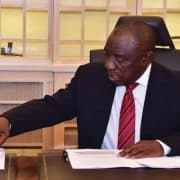
Corruption Watch (CW) welcomes the Constitutional Court’s decision, handed down today, to order Parliament to conduct impeachment proceedings against President Cyril Ramaphosa in connection with the Phala Phala scandal of 2020. The proceedings will be held under Section 89 of the Constitution, which deals with the impeachment of the president by the National Assembly, and subsequent possible removal from office.
The ruling demonstrates the importance of accountability in constitutionally-mandated state institutions such as Parliament, and the imperative on elected public representatives to conclude processes provided for in the Constitution in the public interest.
CW continues to call for accountability on this matter, as it did in 2022, when an independent panel released the findings of an inquiry, also held under Section 89, into whether Ramaphosa had contravened the Constitution and the Prevention and Combating of Corrupt Activities Act. The panel determined that the president indeed had a case to answer, based on the housebreaking and theft of foreign currency from his private residence.
In its statement at the time, CW said the findings of the report had grave implications for the president’s ability to effectively lead the country and maintain the public trust emerging from his administration’s strong anti-corruption agenda. There were still many unanswered questions, said the organisation in 2023 when the South African Reserve Bank cleared Ramaphosa of contravening exchange control regulations regarding the handling of the hundreds of thousands of dollars that were held at his residence yet not reported stolen.
“The timing of this judgment is significant because today is the 30th anniversary of the Constitution,” says Lebogang Ramafoko, CW’s executive director. “The judgment confirms the integrity and independence of the ConCourt and its importance to keep the state in check.”
CW’s newly developed Strategy 2030 emphasises exactly the importance of accountability to the public in processes such as this one, adds Ramafoko. “The organisation pushes for this accountability, understanding the requirements of the law that public representatives must adhere to unconditionally and without fear or favour.“
The laws of South Africa must be applied equally to everyone in the country, from the man in the street to the president, and the Constitutional Court has just reinforced that principle.
An inquiry should have been held at the time of the release of the panel report, had Parliament performed its duty to the standards expected from the public. CW therefore urges Parliament to ensure the Section 89 process takes place as a matter of priority, as part of its commitment to holding the executive accountable.
“The ConCourt judgment is an indictment on Parliament’s handling of processes of national importance in circumstances where political clout takes precedence,” concludes Ramafoko. “Nobody is or should be above the law.”
For media enquiries contact:
Valencia Talane
Cell: 072 366 4968 E-mail: ValenciaT@corruptionwatch.org.za