|
Getting your Trinity Audio player ready...
|
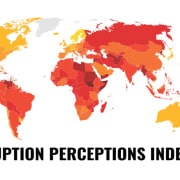
Anti-corruption movement Transparency International (TI) today released the 2025 Corruption Perceptions Index (CPI), highlighting worsening corruption and a decline in leadership globally. The picture in South Africa is equally discouraging, showing little to no progress in the last three years.
South Africa’s anti-corruption efforts, as reflected in this year’s index, are still found wanting as the country stagnates with a score of 41, the same as in 2024, and still below the global average, despite a general decline globally for the first time in more than a decade to just 42 out of 100.
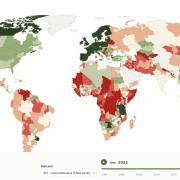
The CPI measures perceived levels of public-sector corruption in 182 countries and territories on a scale of zero (highly corrupt) to 100 (very clean), drawing from 13 independent data sources.
Global context
This year’s results show that the majority of countries are failing to keep corruption under control: 122 out of 180 score under 50, while the number of countries scoring above 80 has decreased from 12 a decade ago to just five this year. This reflects a worrying trend of democracies experiencing rising corruption against a backdrop of tensions between major powers, a dangerous disregard for international norms, the deadly impact of the climate crisis and increasingly polarised societies. These challenges point to the need for strong and principled leaders and institutions with integrity to protect the public interest.
Countries that have shown improved scores over time have largely benefitted from sustained efforts by political leaders and regulators to institute broad legal and institutional reforms. Conversely, those with persistently low or declining scores usually indicate limited or eroding democratic checks and balances, compromised justice systems, undue influence over political processes and a failure to safeguard civic space. Consequently, it is countries with “full democracies” that tend to score the highest on the index, while non-democratic regimes largely perform the worst.
South African perspective
“Corruption Watch (CW), as TI’s South African chapter, has been monitoring the country’s progress on the CPI for close to 14 years, reviewing each year’s results in the context of developments on the ground,” says executive director Lebogang Ramafoko. “While the score has seldom given cause for celebration – remaining steadfastly below the 50 mark – the dip over the past two years to 41 is certainly cause for concern as it suggests that corruption is not being taken seriously enough by our leaders.”
Despite the depressing result, there is still some room for encouragement: South Africa was removed from the FATF grey list in 2025 following consistent efforts from financial governance structures; the country hosted a successful G20 Summit; and corruption allegations within the criminal justice system are being investigated by two constitutionally supported processes, namely the Madlanga commission and the ad hoc committee of parliament. These developments relate to the important point that the CPI measures perceptions of corruption, not actual reports from the public, which means that sometimes recent developments are not always reflected in the report.
The inability of governments to act against corruption by introducing new laws or strengthening existing ones to combat it- and the more disturbing pattern of restricting freedoms of expression, association and assembly – makes it harder for civil society organisations and whistle-blowers to speak out against corruption freely and safely. When corrupt officials and politicians continue to abuse their power, the frequent result is poor quality services and fiscal crises, as public funds are mismanaged, contributing to enduring poverty, rising inequality and worsening living standards for millions of people.
Sub-Saharan Africa
Corruption remains a serious problem in sub-Saharan Africa, the lowest performing region with an average of 32 out of 100. Only four out of 49 countries scored above 50, while ten of the 49 have significantly worsened since 2012 and only seven have improved in the same period.
The Seychelles (68) comes out top again as the region’s highest scorer, followed by Cabo Verde (62), Botswana (58), Rwanda (58) and Mauritius (48). The lowest scorers include Sudan (14), Eritrea (13), Somalia (9) and South Sudan (9). South Africa ranks 12 on the regional table, having fallen out of the top 10 some years back.
Despite the adoption of the African Union Convention on Preventing and Combatting Corruption, much more needs to be done by African governments to step up efforts to translate their anti-corruption commitments into decisive action. TI calls on the continent’s leaders to further strengthen accountability institutions and increase transparency, protect civic space and support public participation, while ensuring that the necessary checks and balances on power are in place.
Interpreting the trends
For the eighth year in a row, Denmark tops the overall scores on the index (89), followed by Finland (88) and Singapore (84). With that said, it is disheartening that only a small group of 15 countries, mainly in Western Europe and Asia-Pacific, manage to get scores above 75, although only five reach scores above 80. Contrast those with the two thirds of countries (68 per cent) that fall below 50, indicating serious corruption problems across most of the world.
The CPI makes the stark distinction between how nations with strong, independent institutions, free and fair elections, and open civic space manage corruption, and those ruled by repressive authoritarian regimes. As a general rule, those classified as full democracies average 71 on the CPI, while flawed democracies average 47 and authoritarian regimes just 32. There are, however, some exceptions with a very small number of non-democratic countries scoring relatively well compared to their regional peers, and being perceived to manage a limited range of corruption types successfully. In such contexts, anti-corruption efforts are typically centralised and top-down, and tend to be unsustainable.
It should also be emphasised that countries with high CPI scores are not necessarily corruption-free, as we have seen several top-scoring nations enable corruption in other countries by facilitating money-laundering and transfer of the proceeds of corruption, and illicit financial flows across borders. Examples are Switzerland (80) and Singapore (84), both of which have come under scrutiny for facilitating the movement of dirty money. However, the CPI does not cover cross-border corruption.
Key drivers and consequences of corruption
Corruption pervades public life, from parliaments and courtrooms to newsrooms, hospitals and schools. When public and elected officials act corruptly, they enable an environment that determines who receives justice, whose voices shape policy, which stories get told and who accesses basic services. When money or personal connections influence decisions, the state becomes a system to navigate rather than a guarantor of rights.
Corruption’s consequences spread across society, interacting with other governance pressures to multiply risks and erode public trust. Its effects are especially damaging in four key areas: justice and the rule of law, democracy and political integrity, civic space and media freedom and public services and inequality. In each domain, corruption reshapes incentives and widens power imbalances.
Ramafoko notes: “It is time for governments and leaders to take decisive action in order to turn the tide against corruption.
TI calls for renewed political leadership on anti-corruption, the protection of civic space with an end to attacks on journalists, whistle-blowers and NGOs, and the closure of secrecy loopholes that allow corrupt money to move across borders.”
Click here for the full report
For media enquiries contact:
Oteng Makgotlwe
Cell: 076 473 8336 E-mail: OtengM@corruptionwatch.org.za