|
Getting your Trinity Audio player ready...
|
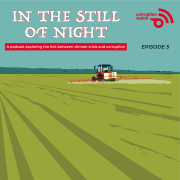
Corruption Watch (CW) today launched a new podcast series, In the Still of Night.
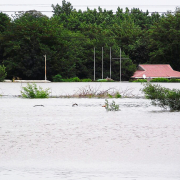
The five-part narrative audio series is a component of CW’s participation in Transparency International’s (TI) Climate Governance Integrity (CGI) programme. The series explores South Africa’s climate governance architecture, its strengths and weaknesses, level of development, and the gaps that exist. It goes further to examine issues of just transition and disaster relief and highlight how climate governance affects ordinary people in Mpumalanga, KwaZulu-Natal, the Western Cape, and Limpopo.
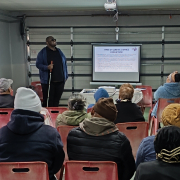
The launch included a curated 24-minute listening session of the first episode which introduces the concept of climate governance and examines how corruption manifests within the climate space. It features perspectives from Mashudu Masutha, a legal expert on climate and mining policy; Gvantsa Gverdtsiteli, a climate researcher from Transparency International Secretariat; and Open Secrets investigators Michael Marchant and Zen Mathe.
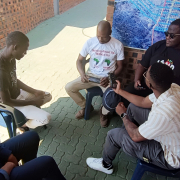
The session also facilitated discussions on themes raised in the podcast.
The first episode is available from today, 15 April 2026, on the RSS platform. The subsequent four episodes will be released weekly on Wednesdays.
“As we try to make sense of the changes accelerating our need to adapt and testing our ability to mitigate the impacts of environmental change,” says project lead Melusi Ncala, “we must remember that corruption continues to exploit our vulnerabilities … whether in governance, the environment, or the lives of the most vulnerable among us.”
The podcast series sheds light on the pitfalls and dangers driven by political and economic elites, adds Ncala, as well as the safeguards that must be strengthened in the face of climate-related disasters, and the management of just transition finance. “It offers an opportunity to better understand policy and legal frameworks, the intentions of key actors, and how ordinary people across South Africa are affected.”
Climate change corruption refers to the abuse of power, public trust, and/or resources for personal or political gain in the context of climate change mitigation and adaptation. This includes mismanagement or theft of climate funds, manipulation of environmental policies, and the improper influence over processes designed to tackle climate change.
The second episode will include Joanne Yawitch, head of the Project Management Unit at the Presidency; Thabo Molelekwa, assistant editor at Oxpeckers; Tim Lloyd, associate at Alt-Advisory; and Bongani Johannes from Mining Affected Communities United in Action. Episode 3 features discussions with Professor Imran Valodia of Wits University, climate science writer Leonie Joubert, and community voices from Limpopo and Mpumalanga, including Grace, Mam’Nkuna, and Sinki. Episode 4 features voices including Wade Parker from Surplus People Project and Blessing Nyoni of the Glory of the Last Days Community Organisation, alongside several community members. The final episode brings together voices heard throughout the series and serves as a conclusion.
Through its CGI programme, TI works to ensure that climate finance is managed with transparency, integrity, and accountability, so it reaches the most vulnerable communities and helps them adapt to the climate crisis. Countries that rely on this support deserve it, and any misuse of these funds is simply unacceptable.
To safeguard the integrity of these climate initiatives, it is crucial to protect them from undue influence and prevent powerful actors from derailing or distorting climate action for their own gain. Ensuring that climate defenders can operate without fear of retaliation and holding those responsible for corruption accountable are key steps in maintaining the integrity of these efforts and preventing actors from acting with impunity.
“Parliament, public servants, and voters alike all have a role to play,” concludes Ncala, “for in the still of the night, criminal actors prey on the most vulnerable among us, dismantling homes, communities, and our shared resources.”
Find the link to the podcast series here.
Listen to episode 1 below, or download it by right-clicking or long-pressing on the audio player:
For media enquiries contact:
Oteng Makgotlwe
Cell: 076 473 8336 E-mail: OtengM@corruptionwatch.org.za