|
Getting your Trinity Audio player ready...
|
Corruption Watch (CW) has been exposing weaknesses and corruption in South Africa’s farm worker equity scheme system for years, through its participation in Transparency International’s Land and Corruption in Africa project which tackles land corruption risks and injustices in sub-Saharan Africa. The organisation completed phase one of the project between 2015 and 2019, and wound up phase two of the project at the end of 2025.
CW’s body of work in this area includes two research reports (2019 and 2023), participation in the 2024 global project report covering several sub-Saharan countries, and a five-part podcast series, the latter compiled from information and voice recordings of affected community members, government representatives, and farmers, all collected during the team’s research field trip to the Western Cape in 2023.
In addition, the organisation wrote in May 2025 to the Public Protector urging it to investigate the matter and make appropriate remedial recommendations, and in November 2025 appeared – with its partners, the Legal Resources Centre, Support Centre for Land Change, and Surplus People Project – before the parliamentary portfolio committee on Land Reform and Rural Development to air their grievances and demand answers in this regard.
Now it appears that the hard work is starting to bear fruit. News has emerged that forensic audits into the schemes are under way, as reported on 5 January in Business Day. The article is reproduced in its entirety below.
Minister admits farm equity audits are under way
By Tara Roos
Land reform and rural development minister Mzwanele Nyhontso has disclosed that forensic audits into farm equity schemes are happening, with the department pursuing fund recovery and considering further investigations into corruption. This follows a written question in the National Assembly by MK MP Andile Mngxitama, who asked what measures are in place to address corruption benefiting white farmers and to secure justice for farmworkers.
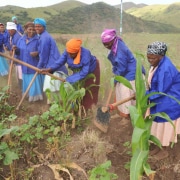
Farm equity schemes were introduced to broaden ownership in commercial agriculture by allocating shares to farmworkers, often through trusts or joint ventures. The intention was to deliver dividends, representation, and eventual tenure security. In practice, however, many schemes collapsed under weak governance. Workers were excluded from management decisions, dividends were withheld, and equity was diluted or sold off under questionable circumstances. These failures undermined constitutional obligations under section 25 of the Constitution to ensure equitable access to land and section 23 to protect labour rights.
Nyhontso explained that the department shifted from equity schemes to the strengthening of relative rights programme, under which land was purchased by the state and leased to joint ventures between former owners and farmworkers. He acknowledged that the programme experienced shortcomings, prompting a forensic audit.
The minister confirmed that recommendations are being implemented “by way of recovering the funds” and that further investigations into equity schemes will be considered to determine whether corruption occurred and to provide remedial action. He added that justice for farmworkers would be pursued where wrongdoing is found.
The report by investigator Mpho Sebashe, referenced in Mngxitama’s parliamentary question, documented how farmworkers in the Northern Cape were misled into selling their shares for as little as R20 000 each, losing multimillion‑rand stakes in 22 commercial farms. Sebashe’s findings pointed to fronting practices and systemic corruption, with government departments slow to act on recommendations. His work has become central to demands that the department confront corruption benefiting white farmers and deliver restitution to workers who were stripped of promised equity.
Nyhontso’s reply aligns with these concerns by committing to audits and recovery, but it stops short of publishing findings or detailing restitution mechanisms.
The broader context is South Africa’s highly unequal agricultural sector. Formal surveys confirm that white farmers continue to produce the majority of key commercial crops, while black farmers’ contributions are often confined to household use and informal markets, leaving them under-represented in official data.
Ownership disparities remain stark: the Bureau for Food and Agricultural Policy notes that more than 70% of farmland remains in white hands, while black ownership accounts for less than 10%. Stats SA data shows that white commercial farmers dominate maize, wheat, and citrus production, while black farmers are concentrated in small‑scale livestock and household food security.
These figures underscore why equity schemes were politically and constitutionally significant: they were meant to shift ownership patterns and embed transformation in commercial agriculture. Their failure and the corruption documented by Sebashe highlight how entrenched inequalities persist despite decades of reform initiatives.